
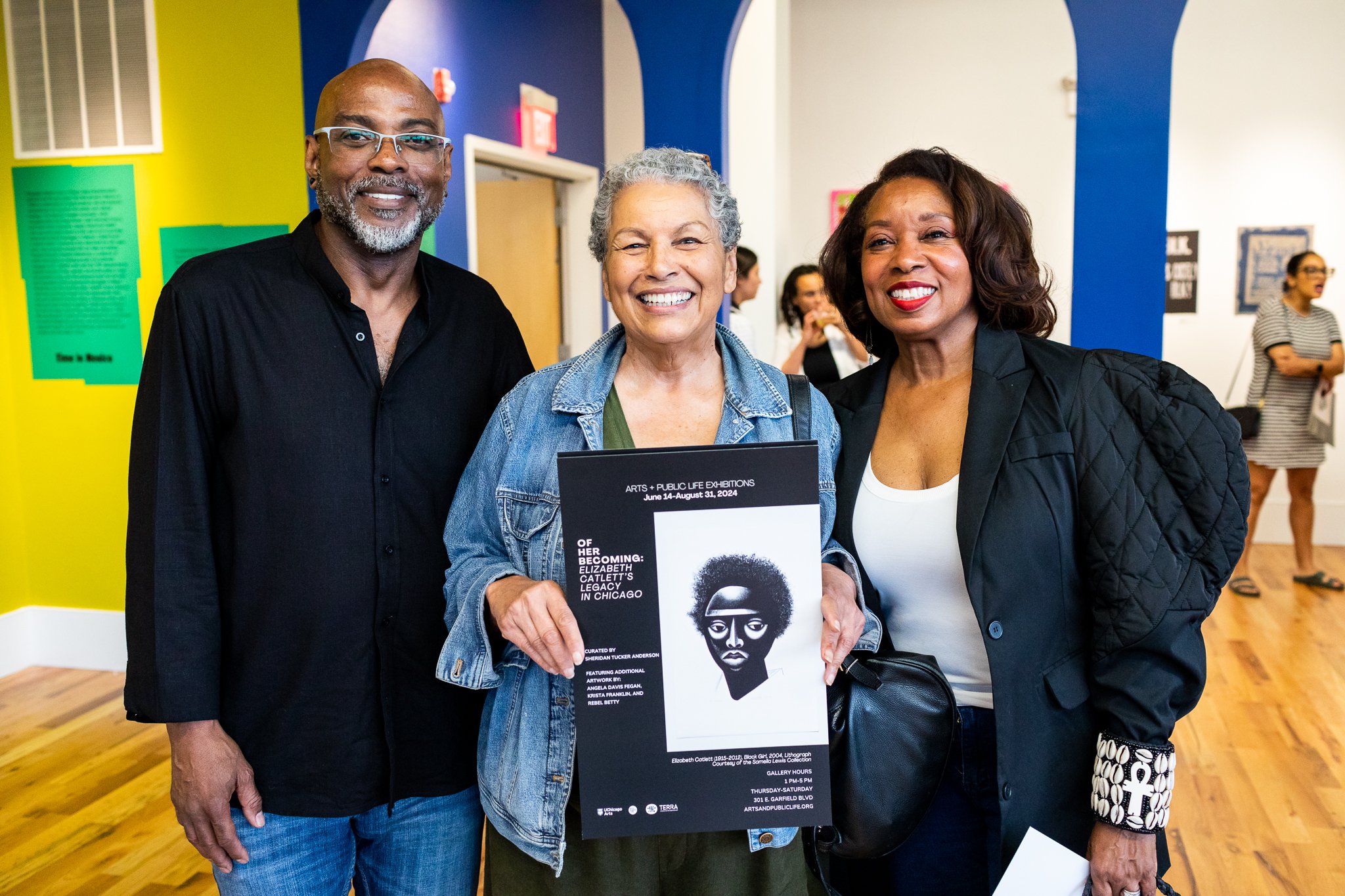
OF HER BECOMING: ELIZABETH CATLETT’S LEGACY IN CHICAGO
JUNE 14 - AUGUST 31, 2024
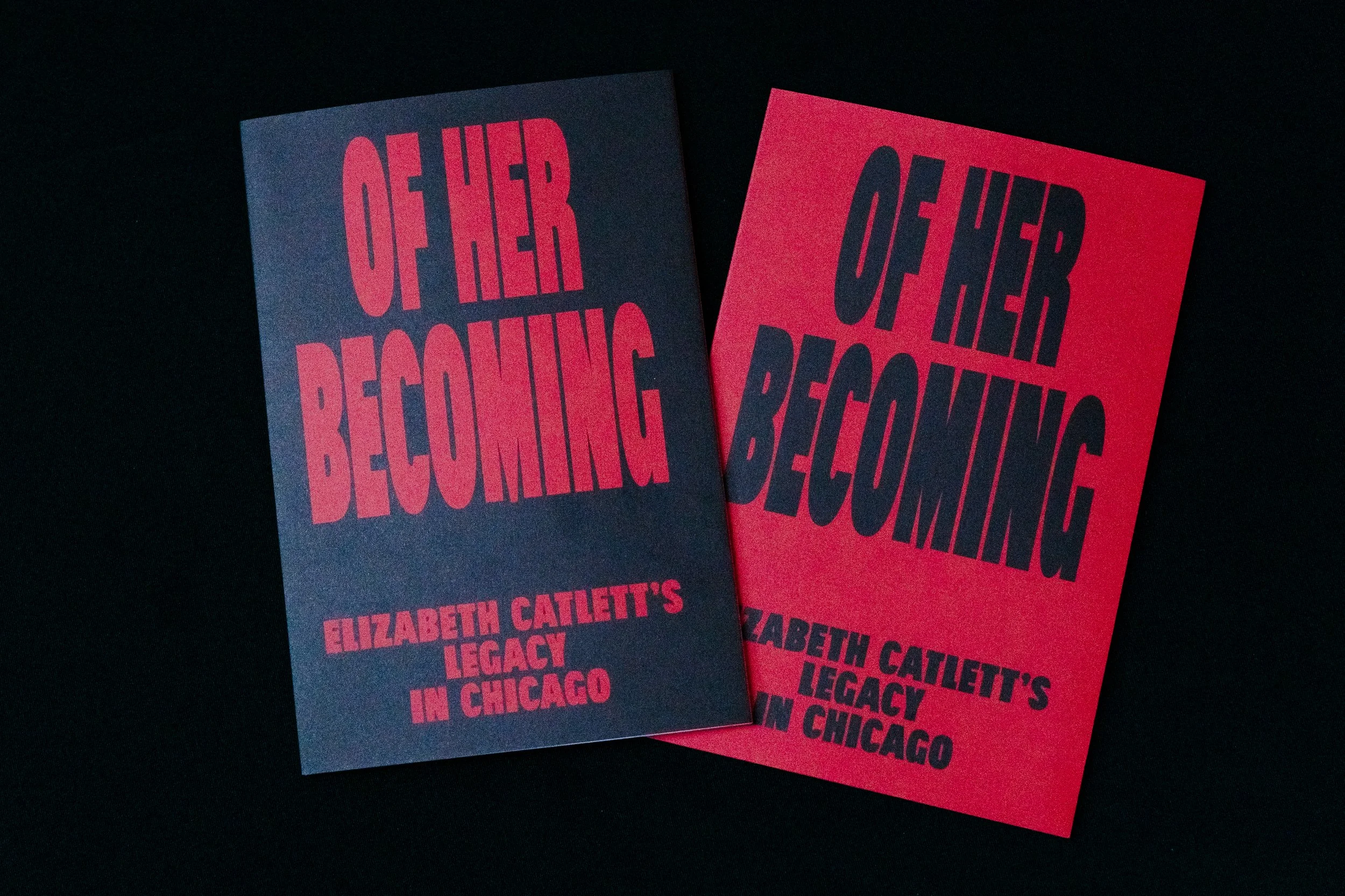
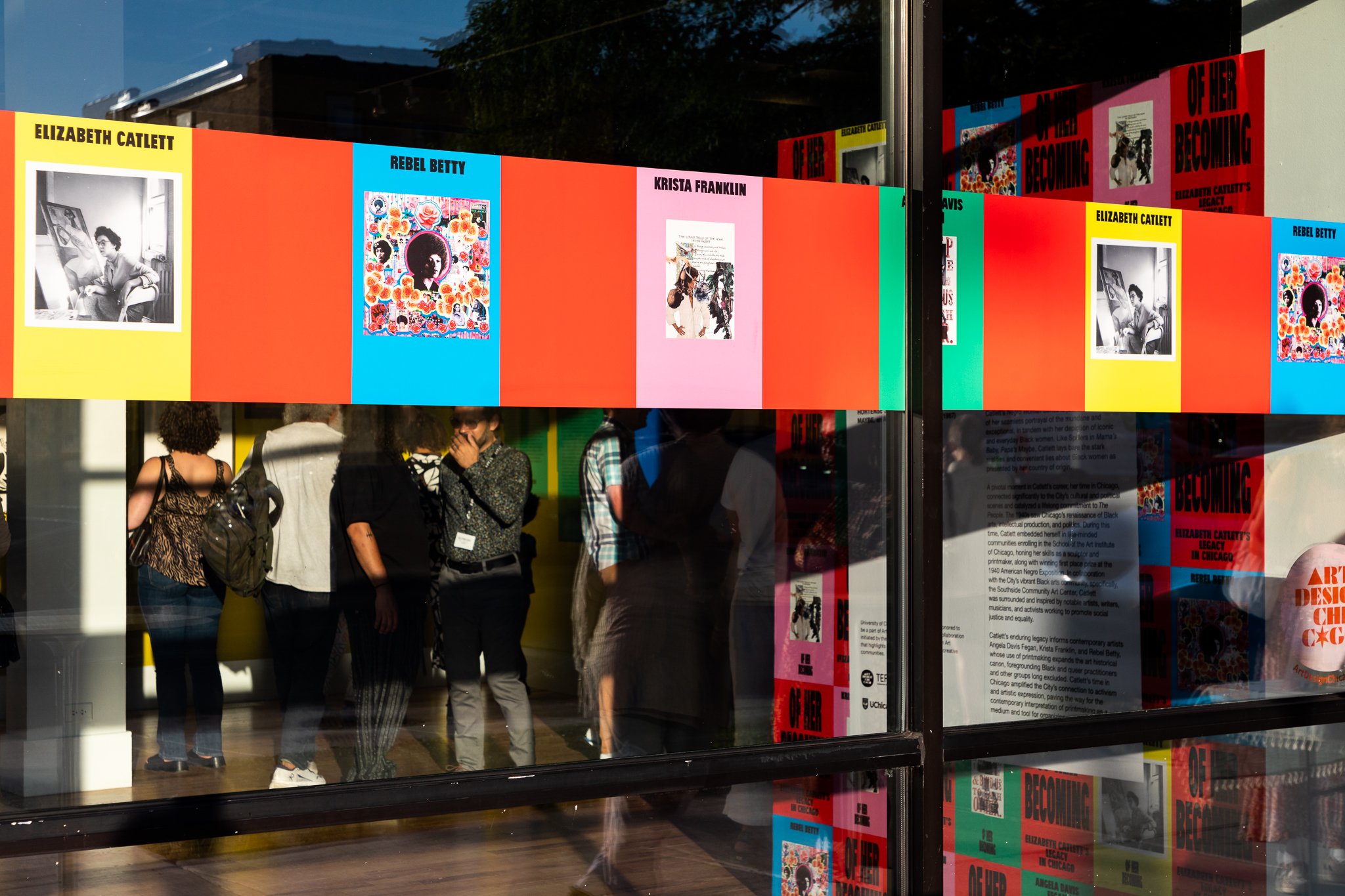
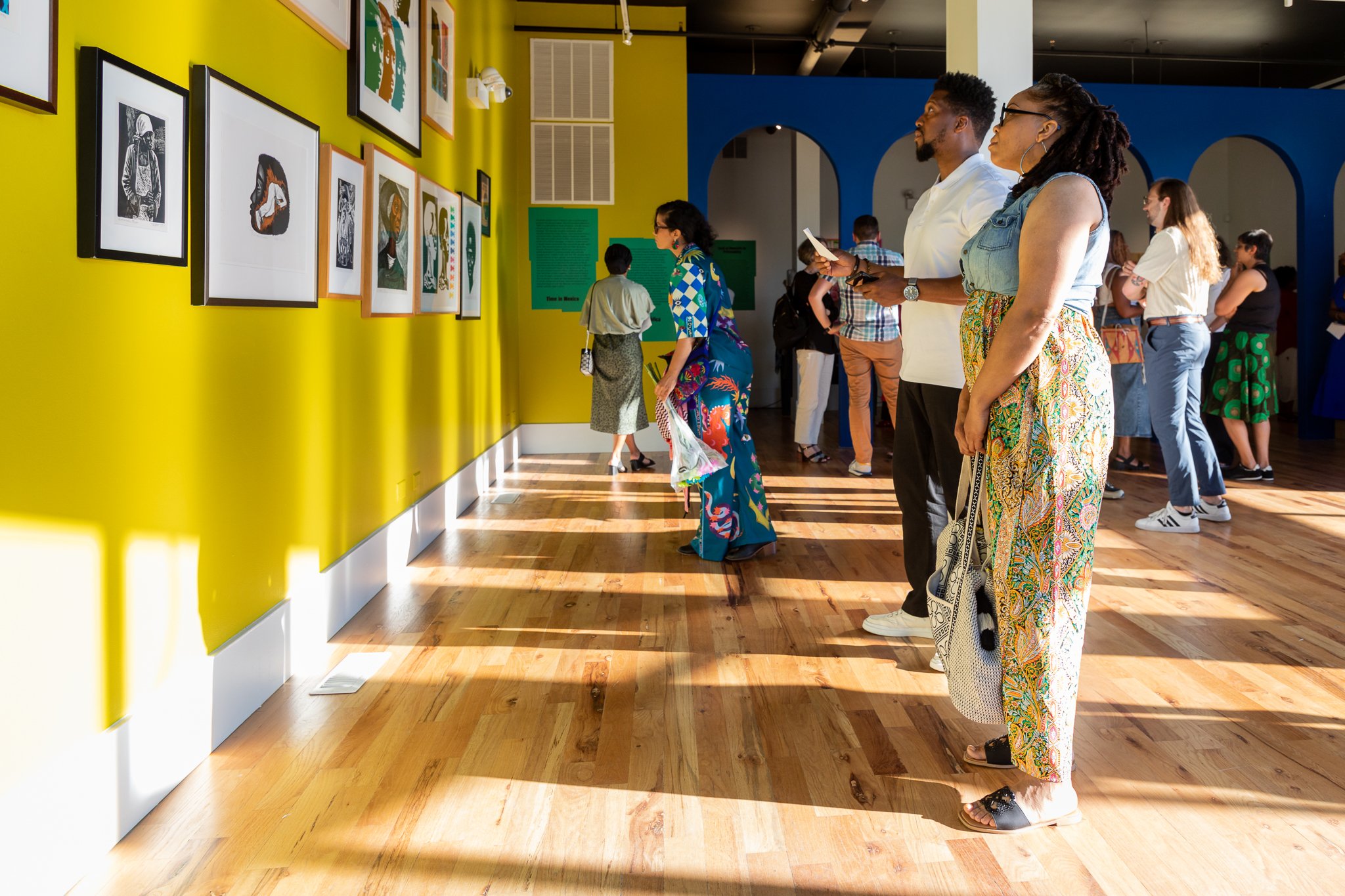
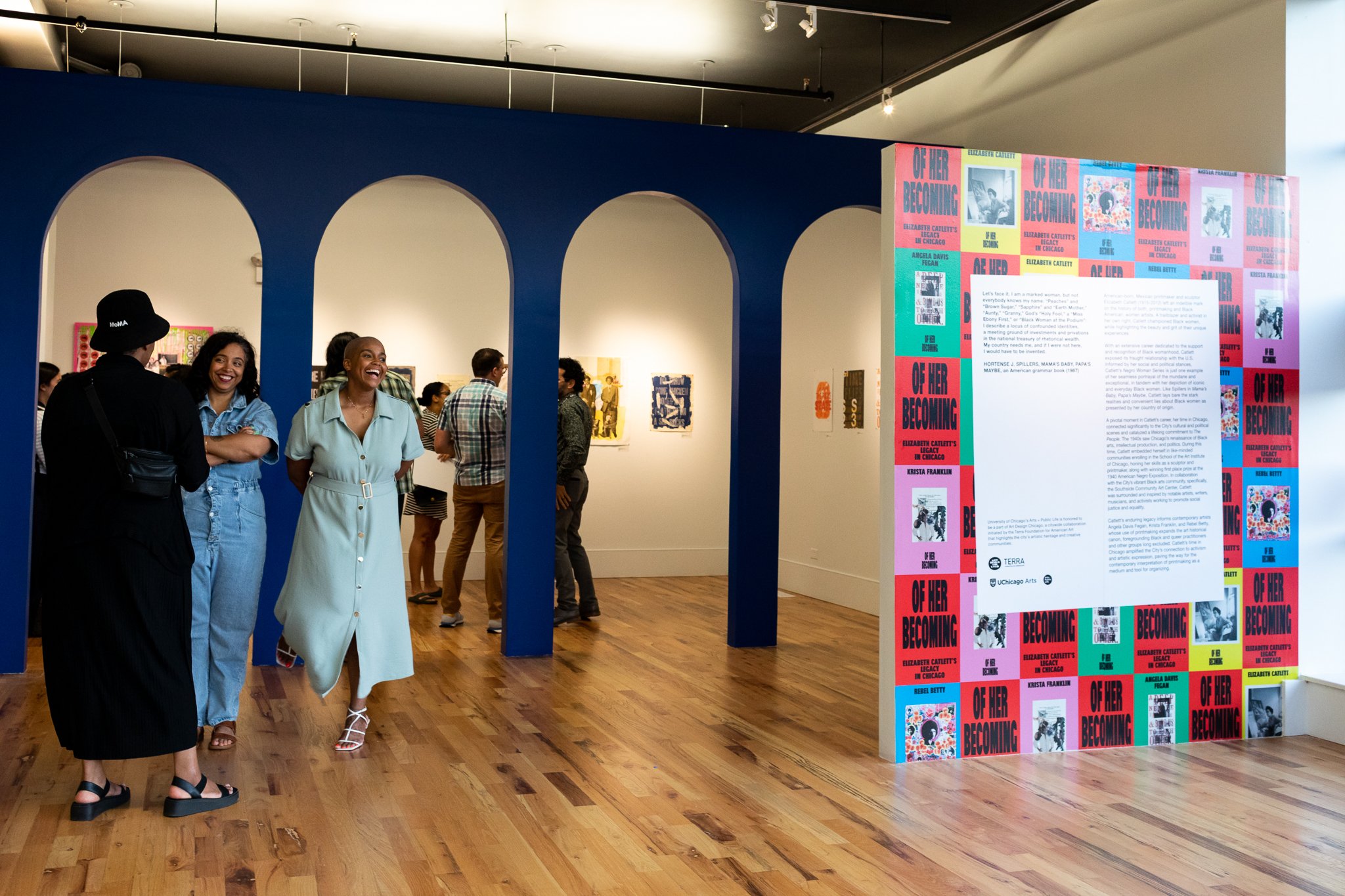
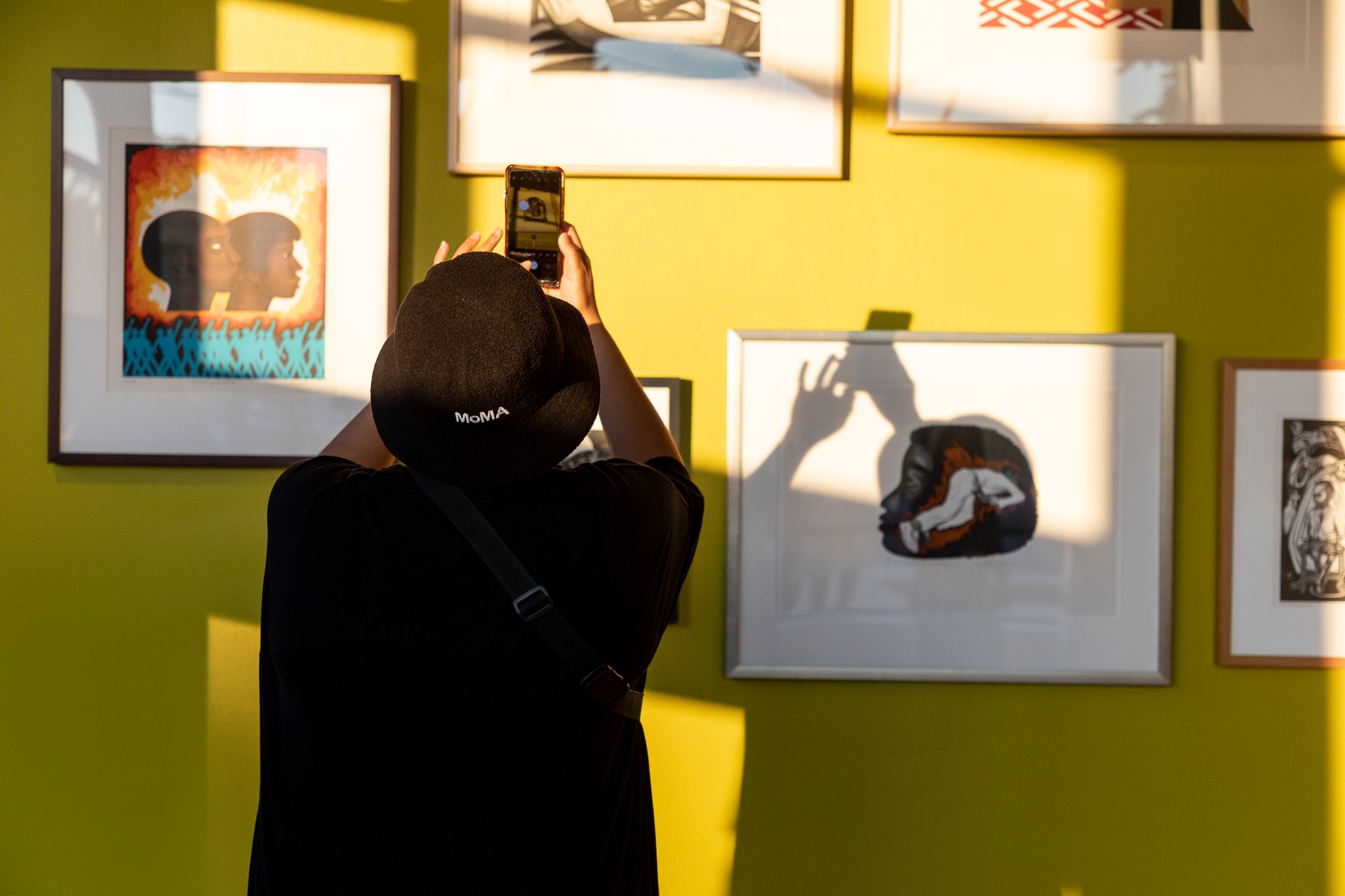
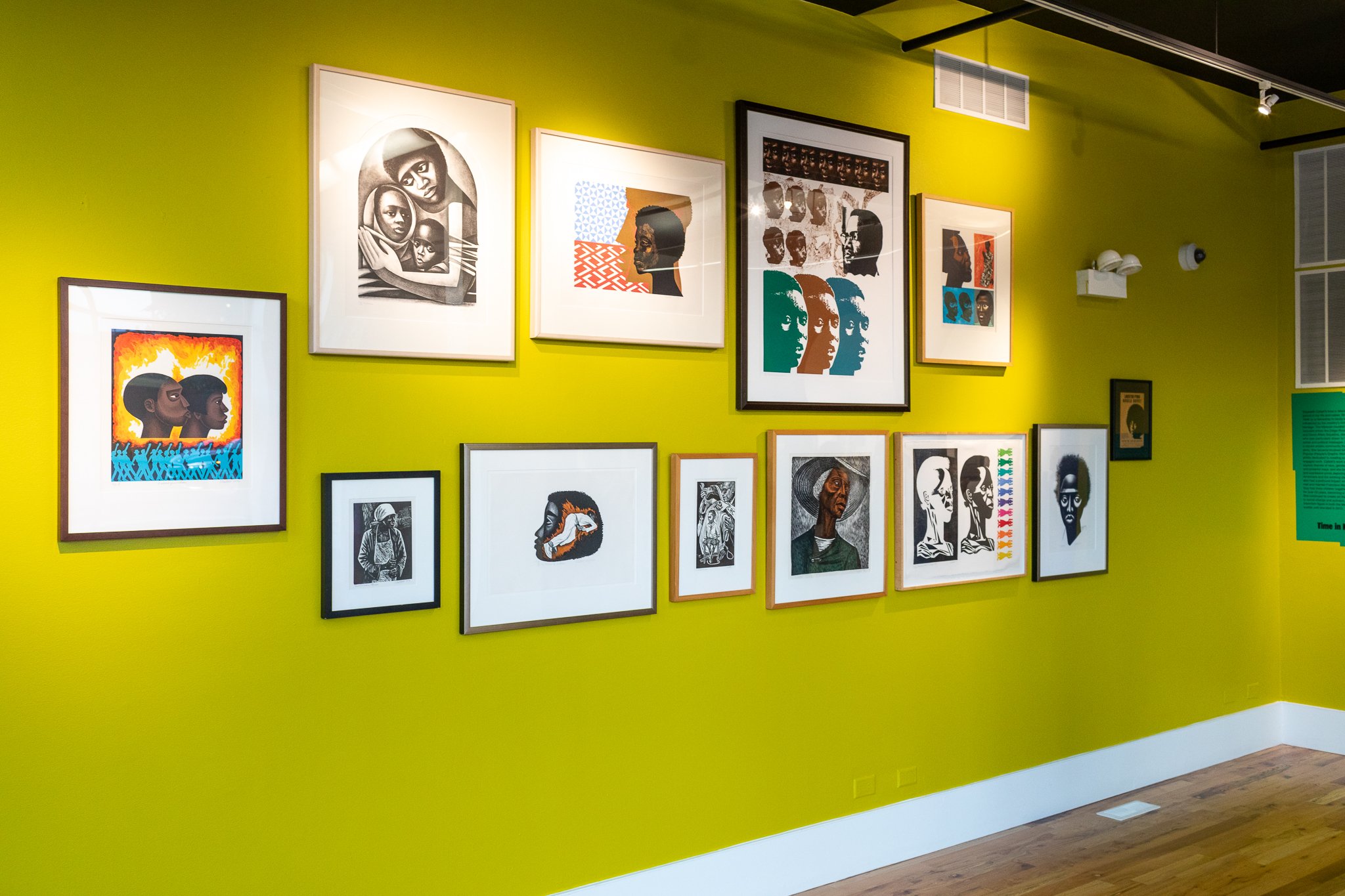
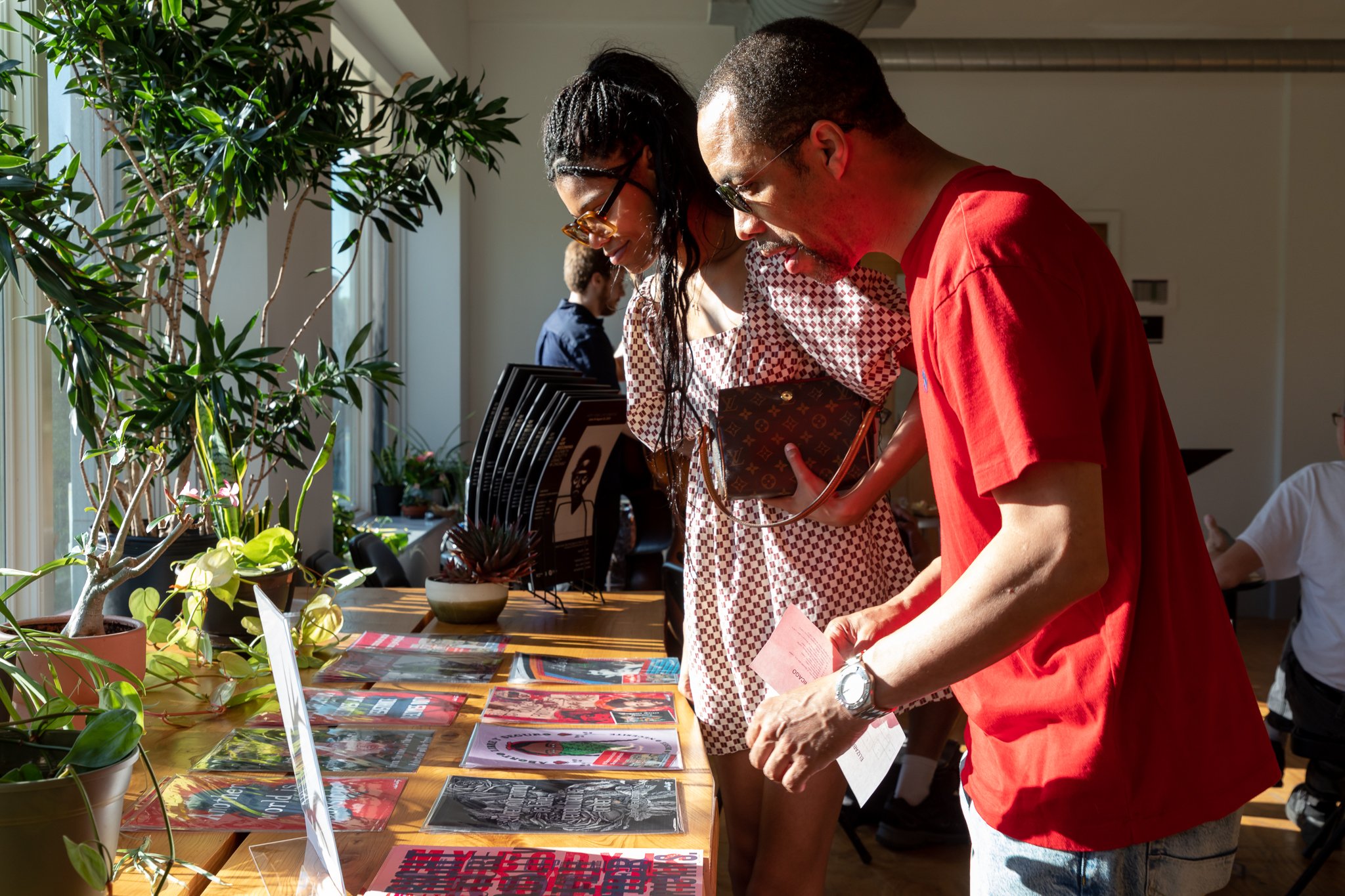
Of Her Becoming highlights the printmaking, work, and impact of influential artist and activist Elizabeth Catlett (1915–2012) within an important site in Catlett’s career: Chicago’s South Side. Curated by Sheridan Tucker Anderson, the exhibition showcases an array of Catlett’s lithograph and linoleum prints alongside works by contemporary Black women printmakers from the South Side, Angela Davis Fegan, Krista Franklin, and Rebel Betty.
Examining the significance of Catlett’s time on the City’s South Side, this exhibition sheds new light on a period that revolutionized her artistic practice, and how her legacy still impacts artists and community organizers today.
Presented at Arts + Public Life’s (APL’s) Arts Incubator Gallery, an important community keystone of APL’s Arts Block, Of Her Becoming engages the neighbors of APL, the youth enrolled in its programs, as well as the local and regional artistic and scholarly communities. This exhibition and related programs offer lessons for today from Catlett’s legacy of advocating, through her artwork, for the well–being and advancement of her communities.
“I felt my work should do something for Black women because nobody was interested in them at that time, to show the beauty and strength and determination of our people. And that’s what I’ve been doing ever since.”
Elizabeth Catlett, aged ninety-four, speaking at MoMA in 2009 about her practice in the 1940s
About the Artist
Elizabeth Catlett (1915–2012) was an American and Mexican artist known for her sculptures and prints featuring African American women.
Elizabeth Catlett was born at Freedmen’s Hospital in Washington, DC. Both her maternal and paternal grandparents were born enslaved, a family legacy that influenced her art. Catlett knew from a young age that she wanted to be an artist. After Carnegie Mellon rescinded her acceptance due to her race, she attended Howard University, graduating in 1935 with a BS in Art. Following her graduation, she supervised elementary school art programs in Durham, North Carolina. In 1939, she began graduate studies in art at the University of Iowa, where she shifted her focus from painting to sculpture, and became the first woman to receive a MFA in sculpture from the University of Iowa. Her master's thesis, a limestone sculpture entitled Negro Mother and Child (1940) won first place in sculpture at the 1940 Chicago American Negro Exposition. Her work often centered black women.
In 1940, Catlett met her first husband, fellow artist Charles White, in Chicago. The couple married in 1941 and moved to New Orleans, but later relocated to Harlem, New York. In New York, Catlett encountered some of the most famous and influential artists and writers of the time including Loïs Mailou Jones, Charles Alston, Aaron Douglas, Jacob Lawrence, and Langston Hughes. She began studying lithography and modernist sculpture and in 1945, she received a grant from the Rosenwald Foundation to produce a body of work focusing on black women.
In 1946, Catlett and White moved to Mexico where Catlett was a guest artist at the printmaking collective, Taller de Gráfica Popular (TGP, People's Graphic Arts Workshop). The artists of TGP used linoleum prints and woodcuts to create didactic sociopolitical art.
While in Mexico, Catlett and White divorced. She remarried Mexican artist Francisco Mora with whom she had three sons. In the 1950s, the House Un-American Activities Committee (HUAC) and the U.S. embassy in Mexico investigated the TGP and Catlett specifically for her bold artwork, political activism, and communist affiliations. The United States government declared her an “undesirable alien,” which impaired her ability to return to the United States. In 1962, she became a Mexican citizen.
Inspired by the artistic activism within her circle of Mexican artists including Diego Rivera, Frida Kahlo, and David Siqueiros, Catlett continued creating images that showed the constant struggle and surprising strength of women, African Americans, those experiencing poverty, and disadvantaged social classes. Throughout her career, Catlett continued to carry these themes through in her bronze, wooden, and terracotta sculptures, prints, and paintings. Her U.S. citizenship was reinstated in 2002. Catlett lived and worked between Cuernavaca, Mexico, and New York City until her death in 2012. Her work has been featured around the world.
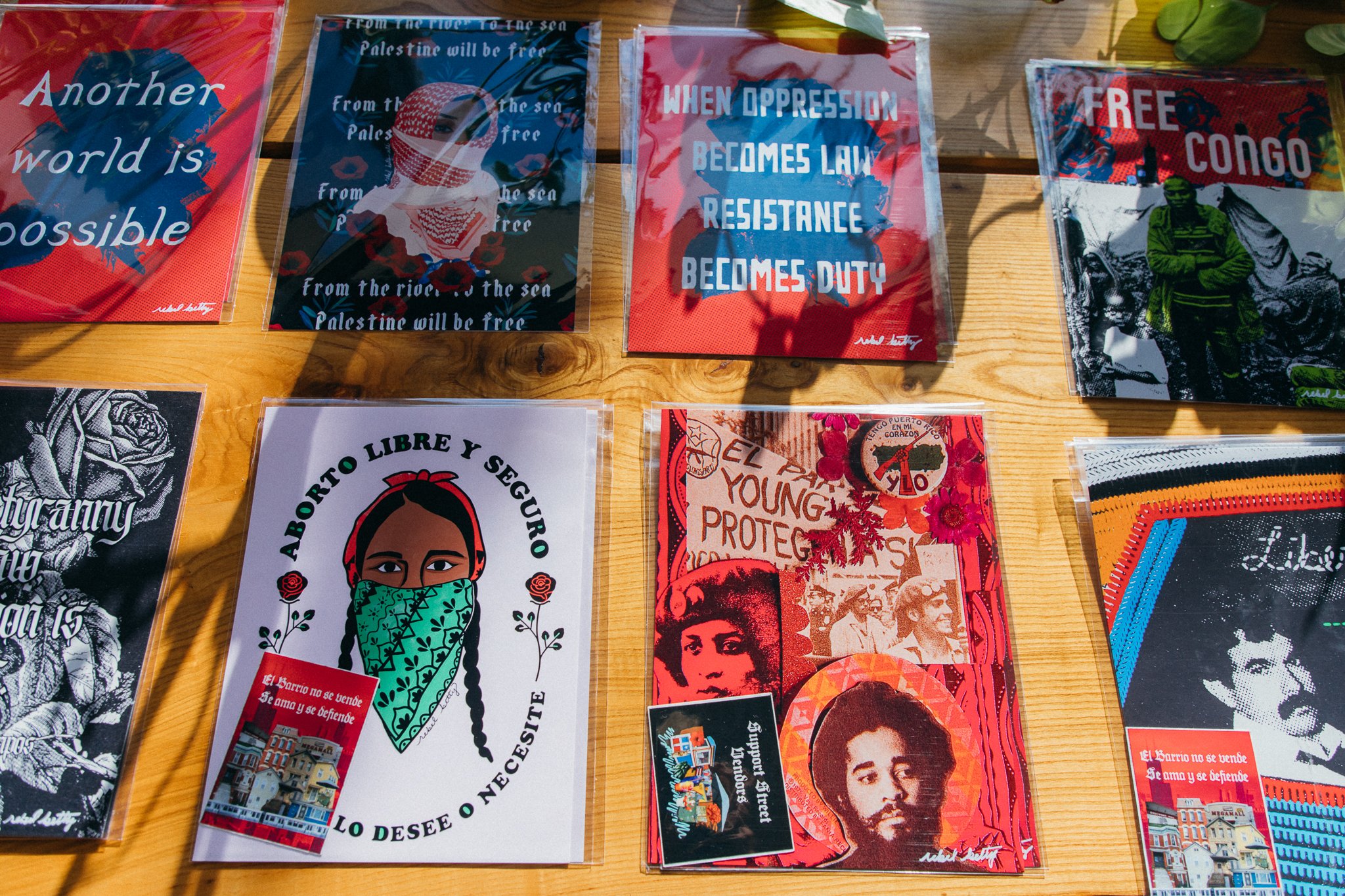
Contemporary printmakers
Angela Davis Fegan is a native of Chicago’s South Side. She received her BFA in Fine Arts from New York’s Parsons School of Design and her MFA in Interdisciplinary Book and Paper Arts from Columbia College Chicago. Angela has mounted shows at Chicago Artists’ Coalition, the DePaul Art Museum, The Center for Book Arts (NY), the University of Chicago’s Arts Incubator and Center for the Study of Gender & Sexuality, the Hyde Park Art Center, SAIC’s Sullivan Galleries, Columbia’s Glass Curtain Gallery, SPACES (OH) and Co-Prosperity. She has held residencies at Connecticut College, the Hambidge Center (GA), Revolve (NC), Project Row Houses (TX) and Women’s Studio Workshop (NY). Her work has been selected for book covers including The Truth About Dolls by Jamila Woods, Secondhand by Maya Marshall, All Blue So Late by Laura Swearingen-Steadwell and Super Sad Black Girl by Diamond Sharp. Her lavender menace poster project has been written up by The Offing (LA Review of Books), Hyperallergic, Chicago Magazine, Go Magazine, Pop Sugar, the Chicago Reader, and Newcity.
Rebel Betty (she/her) is an Afro Indigenous Puerto Rican poet, multidisciplinary artist, and cultural worker based in Chicago. Rebel is using a multidisciplinary approach to depict the magic and movement of Black, Brown, and Indigenous communities and to trace back ancestral forms of resistance and culture through storytelling and archiving moments in history. Her visual art, organizing, and cultural work center on the preservation of culture in Black and Brown communities through facilitated dialogue, poetry, music, education, and the arts.
Rebel's visual art makes use of historical archives and contemporary photography to create colorful and impactful multimedia collages and videos that speak truth to power and document the power and beauty of Black, Brown, and Indigenous communities. Themes in Rebel's work are gentrification, decolonization, and honoring Black and Indigenous struggles for liberation and healing through connection to the past.
Arts + Public Life is honored to be a part of Art Design Chicago, a citywide collaboration initiated by the Terra Foundation for American Art that highlights the city’s artistic heritage and creative communities.
OF HER BECOMING: ELIZABETH CATLETT’S LEGACY IN CHICAGO is funded by the Terra Foundation for American Art.