
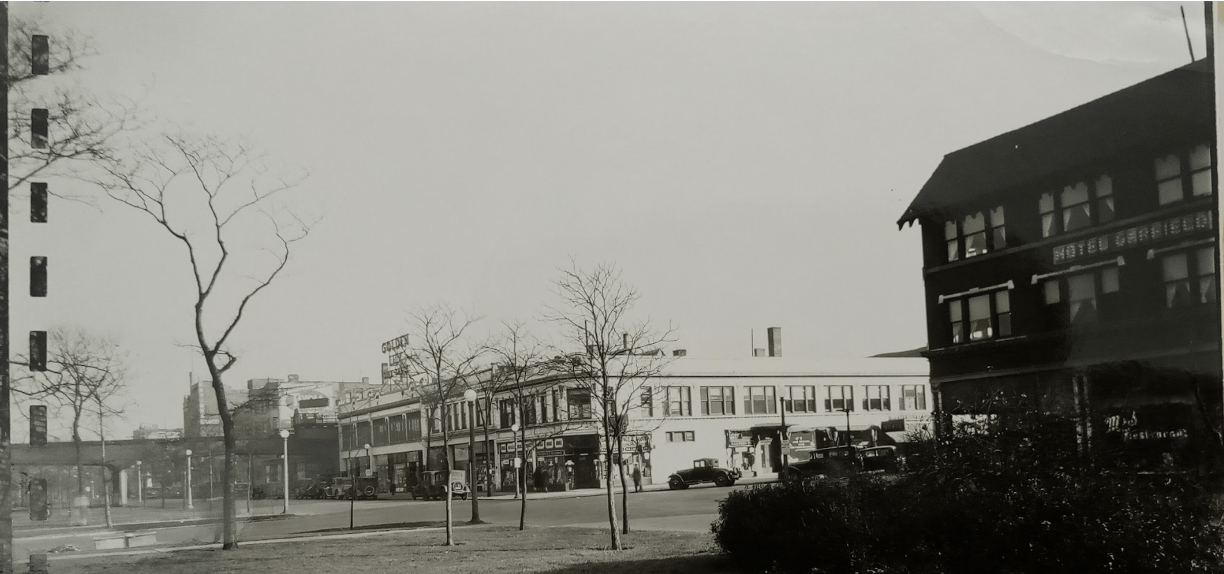
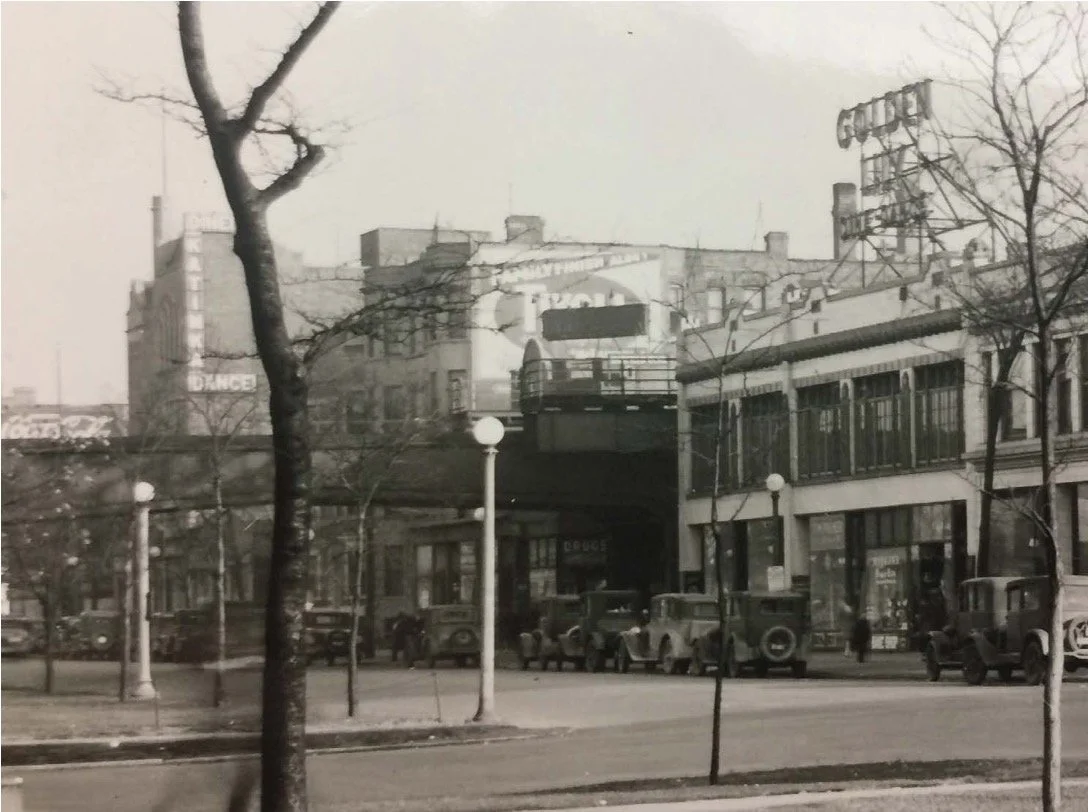
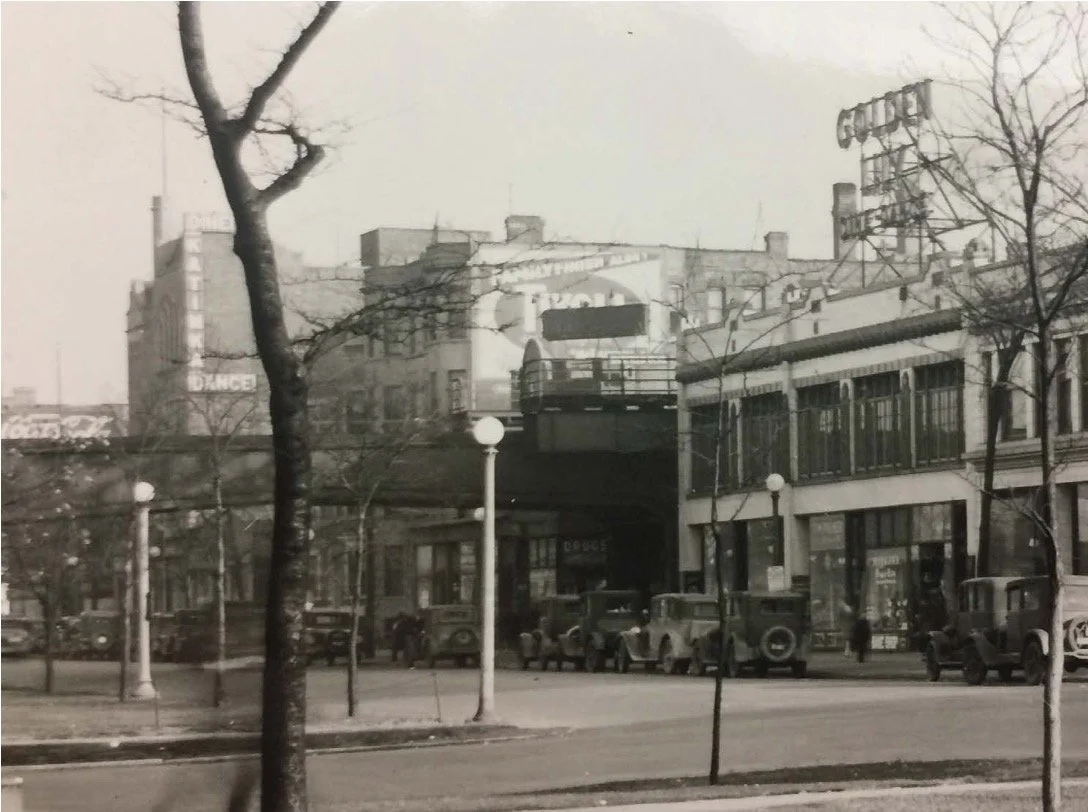
Corner of Garfield Blvd and Prairie Ave, future home of the Arts Incubator, ca 1920s.
A Community History of the Arts Block, 1915 to today
STORIES FROM GARFIELD BLVD.
This companion webpage expands upon the history presented on the Arts Lawn signs. It is a living record of the Arts Block, shaped by archival research, conversations with neighbors and artists, and stories gathered through APL’s programs, partnerships, and informal exchanges over the years.
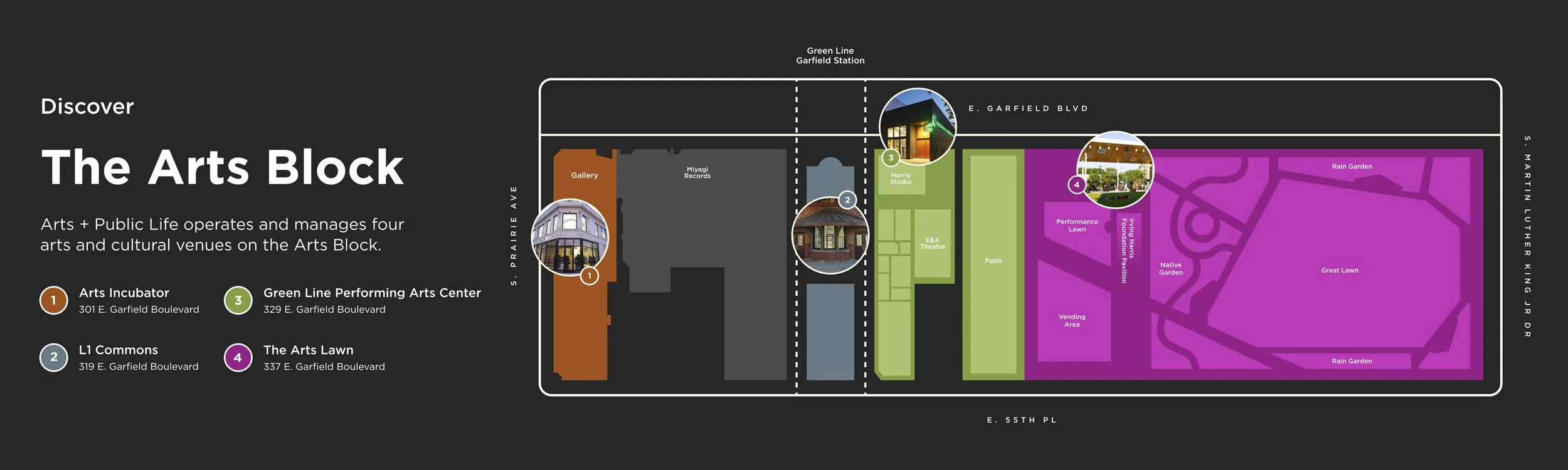
Since Arts + Public Life was founded in 2011 and opened the Arts Incubator in 2013, we have sought to learn about and share what came before us. As APL’s presence on Garfield Boulevard grew from one venue to four, our stewardship of these spaces deepened our understanding of Washington Park’s rich arts and cultural history, and more specifically, the history of the Arts Block between Prairie Avenue and King Drive.
When the Arts Lawn opened in 2023, its design included permanent signage as an accessible way to share stories, images, and historical information connected to the block. Building on the work of APL’s 2025 Washington Park in Our Time research cohort, the Arts Lawn Signage Working Group helped determine the signs’ scope and direction. Through archival research and story gathering, the group reviewed maps, photographs, articles, data, and personal accounts spanning 1915 to the present. Its discussions and guidance shaped the three historical eras presented on the signs and the invitations for visitors to contribute their own knowledge.
Arts + Public Life does not claim to be a historical authority on Washington Park. We approach this work as cultural stewards—with care, curiosity, and a commitment to gathering and sharing neighborhood knowledge. We recognize that the history presented here is incomplete and may contain errors. If something is missing or needs correction—or if you have a memory, photograph, story, or fact to contribute—please share it with us. Your contribution can help build a fuller account of the people, places, and cultural life that have shaped this block.
Arts Lawn Signage Working Group
Arts + Public Life stewards multiple spaces across the Arts Block, each carrying its own history and its own relationship to the culture that has unfolded here over generations. Signage on the Arts Lawn gives us a chance to honor what came before and surface the many stories embedded in this ground. Each sign is an invitation - both to hear these stories and to offer your own. Following the work of APL’s Washington Park in Our Time research cohort (2025), the Arts Lawn Signage Working Group was tasked with figuring out what that invitation on each sign should say, and how. Over months of archival research and story gathering, the group collected and reviewed maps, photos, articles, anecdotes and data about the history of the Arts Block from 1915 - 2026. Their discussions and guidance shape the content of the signs and offer prompts for your contributions.
Community Members
Sheila Nicholes: artist, photographer, neighborhood advocate, and Program Chair of the Washington Park Camera Club
Rose Blouin: photographer; solo exhibition To Washington Park, With Love: Photographs from the Summer of 1987, Arts + Public Life’s Arts Incubator, 2022
Andrew Mosley: lifelong Washington Park resident, graduate of APL’s BackStage Production program, and APL production crew member
APL Team
Nootan Bharani, Adrienne Brown, Sabrina Craig, Isis Ferguson
Student Research Assistant
Orion Douglas: University of Chicago, B.A. in Environment, Geography & Urbanization and Global Studies (Health, Environment & Urban track), minor in GIS
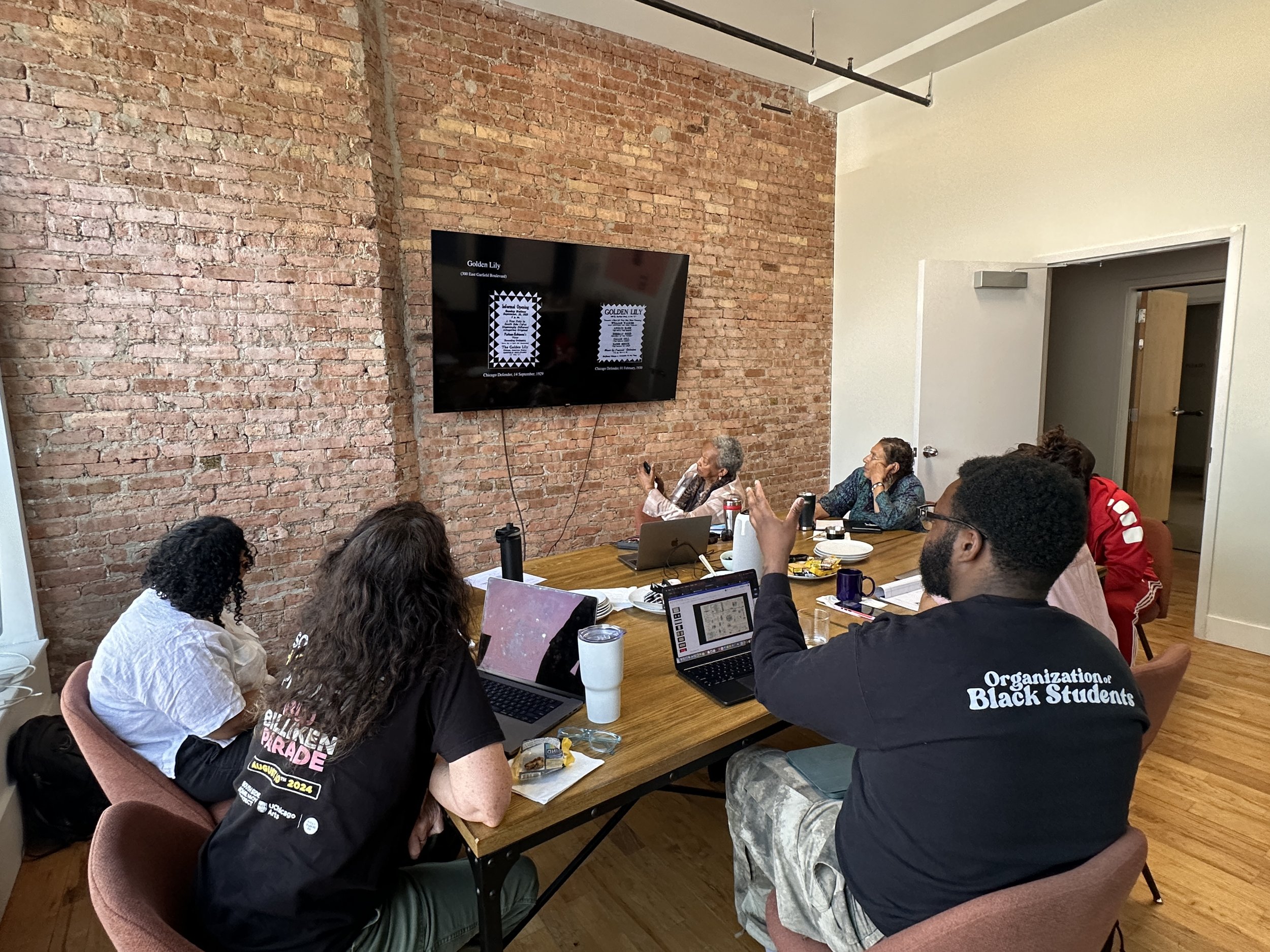
Working group studying the Golden Lily ad, photo by Nootan Bharani
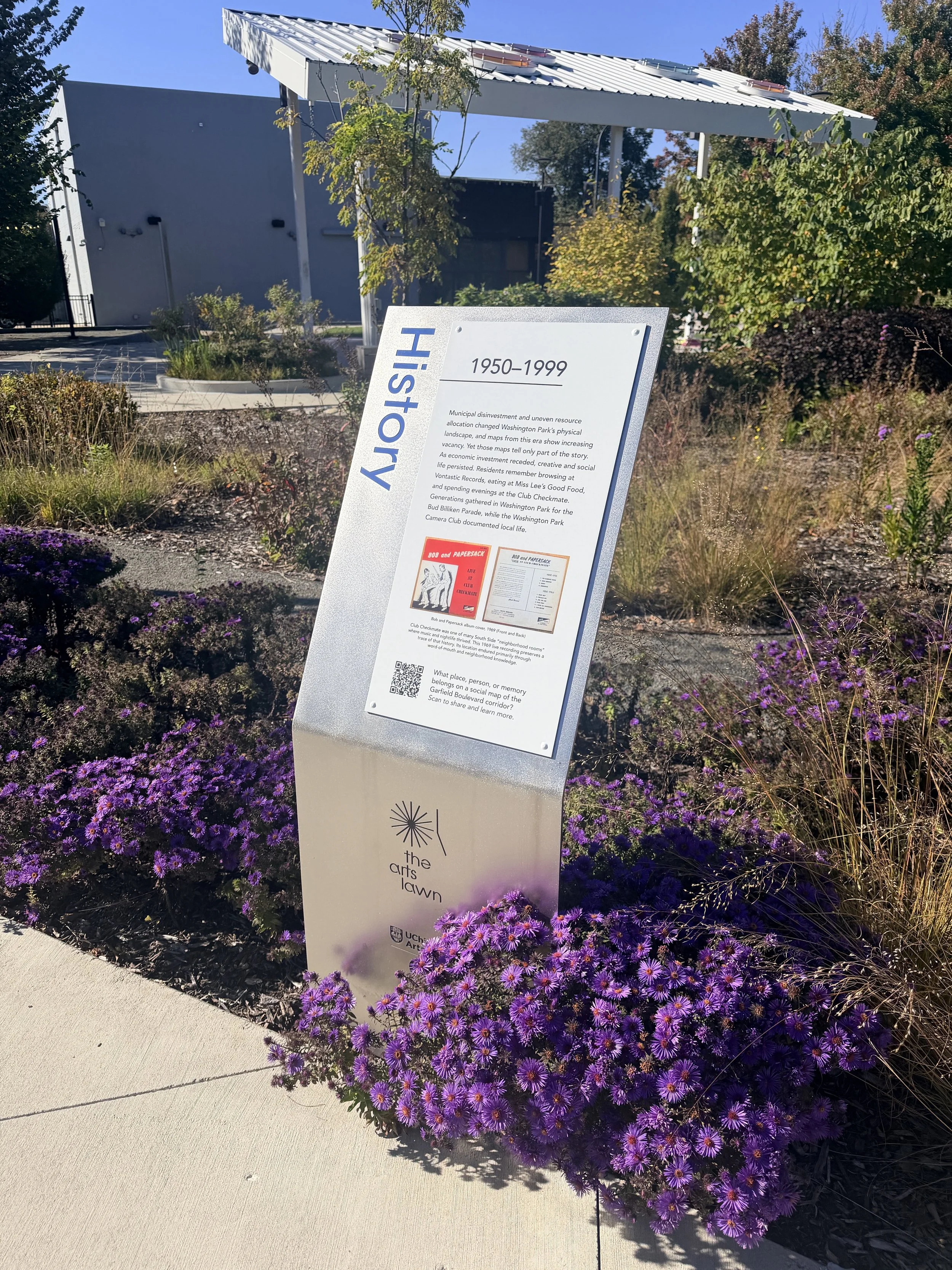
History signage on the Arts Lawn, photo by Isis Ferguson
Click to travel to the time period you are interested in or scroll down the page
1915-1950
During the Great Migration, Chicago became a primary destination for Black Americans leaving the rural South for the urban North. In search of economic opportunity, improved living conditions, and greater freedom from Jim Crow laws and racial violence, millions took part in one of the largest internal migrations in American history. During the initial wave from 1915 to 1940, Chicago’s Black population more than doubled.
Racial segregation and discriminatory housing practices confined Black residents to a narrow area of the South Side known as the Black Belt. Within this broader region, Bronzeville emerged as the Black Metropolis—the commercial, cultural, and political epicenter of Black Chicago—while neighboring Washington Park became part of its expanding cultural influence.
Commercial corridors including 47th Street, Garfield Boulevard, and 63rd Street flourished with Black-owned businesses, clubs, and restaurants. As the South Side’s Black population grew, so did the venues that drew people together for dining, dancing, music, and nightlife. Among them, and along or adjacent to 55th Street were the Michigan Theater, a 781 seat movie house, Rhumboogie Cafe (in this location) and Club DeLisa, along with Ciro’s Lounge, The Ritz Club and White’s Emporium. Their stages featured renowned singers, dancers, musicians and comedians including Count Basie, Sarah Vaughan, Dinah Washington, T-Bone Walker, Sun Ra, Duke Ellington, Bessie Smith, Ethel Waters, Cab Calloway and Redd Foxx. The immense cultural footprint of the Black Metropolis and the venues along Garfield Blvd. reverberates today and informs the contemporary arts programming along the Arts Block today.
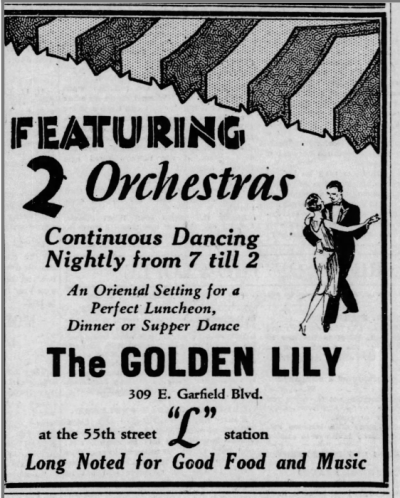
Golden Lily Cafe
“Located steps away from the 55th Street elevated train depot, the Chinese-owned Golden Lily Cafe opened around 1920… Rather than serving lattes, the Golden Lily Cafe featured two orchestras and nightly dancing from 7 to 2. As a business situated in a racially segregated city, it was reported to have a strict whites-only policy for most of the 1920s. But this whites-only policy became bad for business as the neighborhood surrounding it became predominantly black and many white patrons sought entertainment elsewhere. In October 1929, the Golden Lily decided to adapt to this by catering to a black rather than white clientele. It replaced its white orchestra with a black one and declared its doors open to all— regardless of race. Two weeks later, the Golden Lily was bombed. … The bombing luckily did not injure anyone, and the Golden Lily was so popular that it reopened for business the very same evening. With black musicians and a mostly black clientele, the Golden Lily became a place where up-and-coming jazz stars…”
—The Golden Lily and Racial Change in Washington Park
by Hugh Shepard
Rhumboogie Cafe
“During the 1930s and ‘40s, Garfield Boulevard had sidewalk traffic at all hours, as many of the lounges, clubs, and restaurants stayed open until just before daybreak. On hot summer nights, the grassy median of Garfield Boulevard was covered with blankets where people escaping crowded apartments slept… It only took ten minutes to walk along Garfield Boulevard from the Club DeLisa on the western edge of the Black Belt to the famous Rhumboogie Club, formerly known as Dave’s Cafe, on the eastern side. Along the way, you would pass the imposing five-story Schulze Baking Plant, the 1,400-seat Michigan Theater, and a handful of smaller clubs and cocktail lounges before passing under the elevated train station and reaching the Rhumboogie by Washington Park. Music was so vibrant in this area that even the smaller clubs had their own bands, creating a hub for musicians and entertainers of all stripes. On just the single city block of Garfield Boulevard that stretches from Washington Park to the elevated train station, there were 23 musicians who performed regularly at the Rhumboogie Club, Ciro’s Lounge, and White’s Emporium... By 1942, after [Dave’s Cafe] was renamed the Rhumboogie, you could find Joe Louis, a famous Black heavyweight champion boxer, cracking jokes and leading the show when he was in town. Louis was rumored to own shares in the club, which he later purchased. His fame helped to attract many of the top musicians of the day, such as the great swing band leader Tiny Bradshaw and the early blues musician T-Bone Walker, who recorded an album at the club. The Rhumboogie also provided performance opportunities for up-and-coming musicians like blues singer Dinah Washington, who sang at the Rhumboogie at age 22, a few years before making it big in the national R&B scene.”
One address, many names
343 E. Garfield is listed as Rhumboogie Cafe, Rhumboogie Club, Dave's Cafeacute, Dave’s Café, Swingland Cafeacute. As ownership changed, so did the venue’s name. (Source: https://campber.people.clemson.edu/rhumboogie.html)
The Golden Lily Cafe, formerly located at 309 E. Garfield Blvd, ca 1920s.
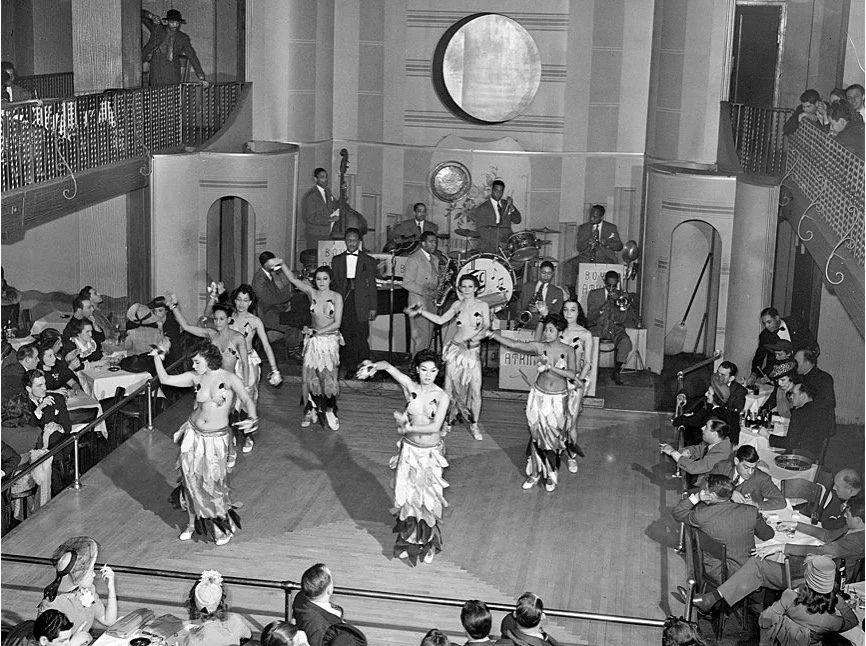
Interior of Rhumboogie Cafe, formerly located at 343 E Garfield Blvd. Photographer Russell Lee, Farm Security Administration, 1941, Chicago History Museum, ICHi-025378
1950-1999
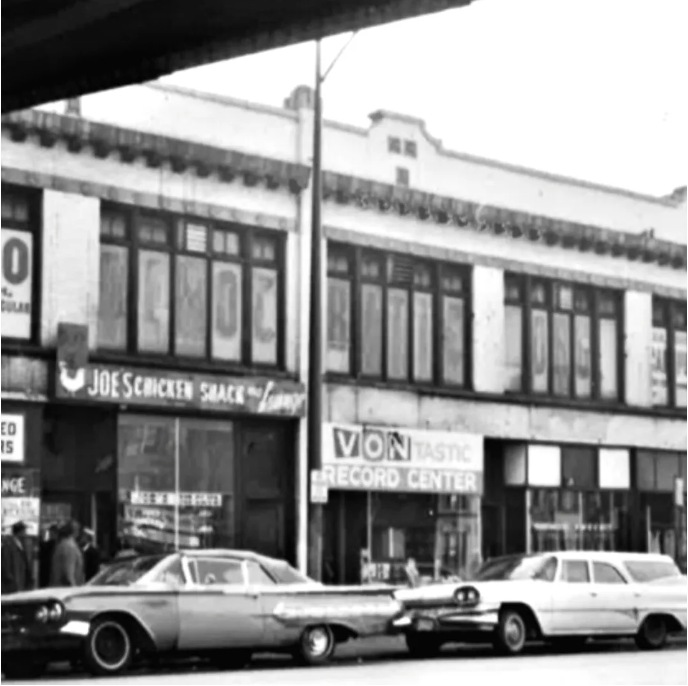
Between 1950 and 1999, Washington Park entered a period of profound transition. Urban renewal, discriminatory policies, and public and private disinvestment reshaped the neighborhood, contributing to population loss and the closure or demolition of homes and businesses. Despite the social and political upheavals of the 1960s and the economic challenges of the 1970s and 1980s, cultural anchors endured. Businesses such as Vontastic Records Center and Beauty Shop and Miss Lee’s Good Food, along with entertainment venues such Checkmate Lounge and Mr. Ricky’s, remained popular destinations within the neighborhood’s cultural and commercial landscape.
Residents also organized through civic, political, and cultural groups to resist disinvestment, strengthen community, and build power. Civil rights activism fueled a growing Black political consciousness and helped propel Harold Washington’s historic election as mayor in 1983. Founded in 1955, the Washington Park Camera Club (still active today) documented the neighborhood and greater Chicago life during these decades. The Bud Billiken Parade, established in 1929, continued to bring generations of Black Chicagoans to Washington Park for celebration and collective joy. Together, these enduring traditions reflected the neighborhood’s place within the cultural and political life of Black Chicago.
307 E Garfield Blvd
From Vontastic Record to Miyagi Records
339 E Garfield Blvd
From Club Checkmate to the Arts Lawn
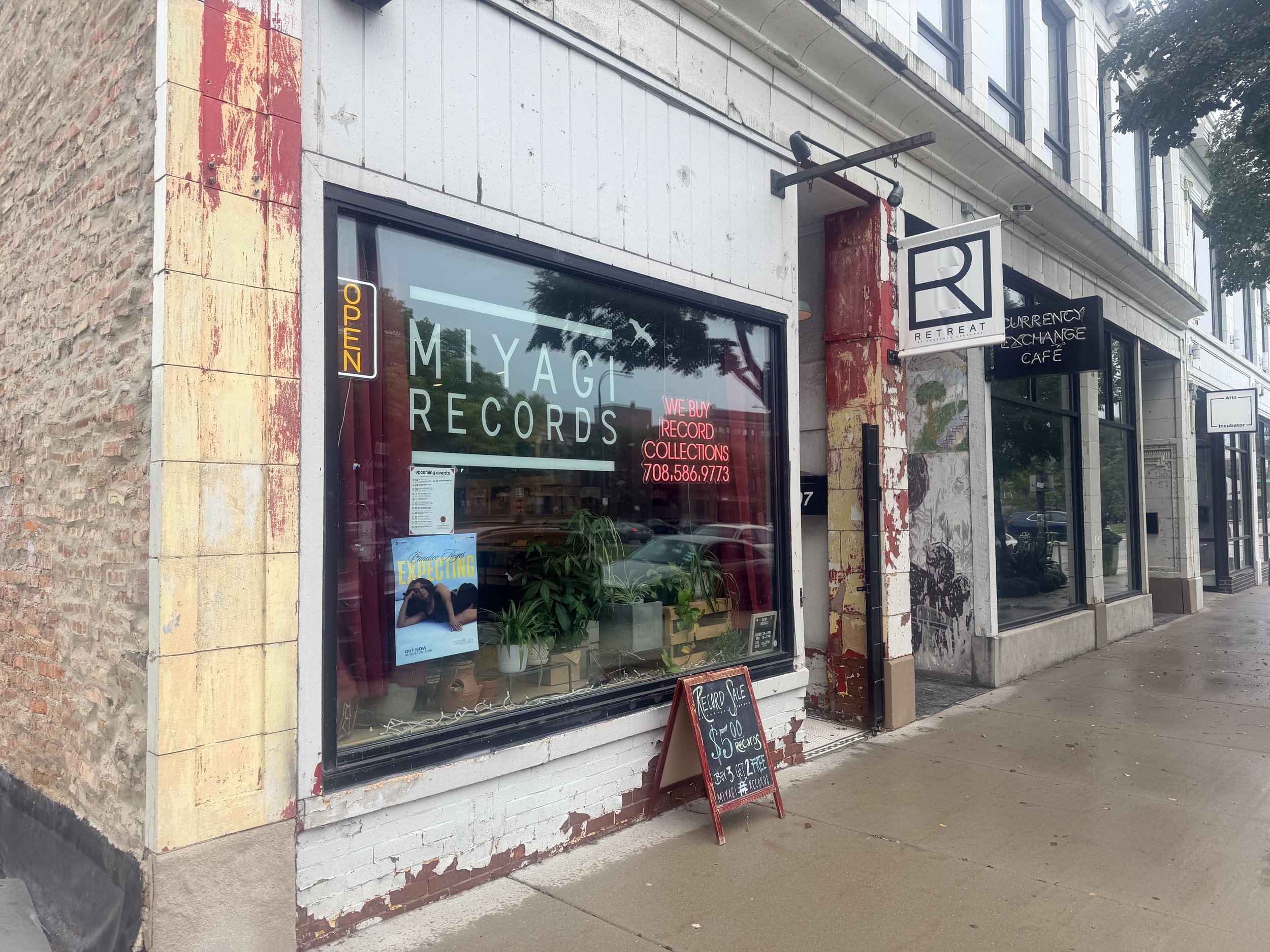
307 E. Garfield Blvd is now home to Miyagi Records
Vontastic Record Center and Beauty Shop, at 307 E. Garfield Blvd, ca. 1960s
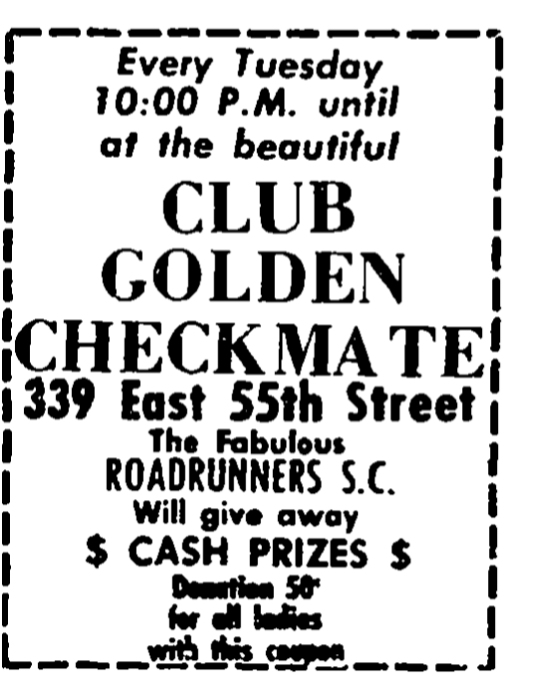
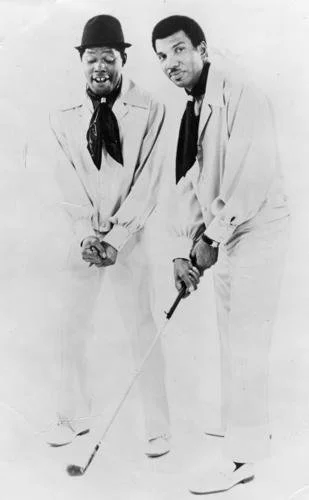
Display ad, Chicago Defender (Daily Edition) (1973-); Oct 11, 1973; ProQuest Historical Newspapers: Chicago Defender pg. 15
“During the 1930s and ‘40s, Garfield Boulevard had sidewalk traffic at all hours, as many of the lounges, clubs, and restaurants stayed open until just before daybreak. On hot summer nights, the grassy median of Garfield Boulevard was covered with blankets where people escaping crowded apartments slept.It only took ten minutes to walk along Garfield Boulevard from the Club DeLisa on the western edge of the Black Belt to the famous Rhumboogie Club, formerly known as Dave’s Cafe, on the eastern side. Along the way, you would pass the imposing five-story Schulze Baking Plant, the 1,400-seat Michigan Theater, and a handful of smaller clubs and cocktail lounges before passing under the elevated train station and reaching the Rhumboogie by Washington Park. Music was so vibrant in this area that even the smaller clubs had their own bands, creating a hub for musicians and entertainers of all stripes. On just the single city block of Garfield Boulevard that stretches from Washington Park to the elevated train station, there were 23 musicians who performed regularly at the Rhumboogie Club, Ciro’s Lounge, and White’s Emporium... By 1942, after [Dave’s Cafe] was renamed the Rhumboogie, you could find Joe Louis, a famous Black heavyweight champion boxer, cracking jokes and leading the show when he was in town. Louis was rumored to own shares in the club, which he later purchased. His fame helped to attract many of the top musicians of the day, such as the great swing band leader Tiny Bradshaw and the early blues musician T-Bone Walker, who recorded an album at the club. The Rhumboogie also provided performance opportunities for up-and-coming musicians like blues singer Dinah Washington, who sang at the Rhumboogie at age 22, a few years before making it big in the national R&B scene.”
—Chicago Daily Defender (Big Weekend Edition) (1966-1973); March 16, 1968
ProQuest Historical Newspaper: Chicago Defender pg. 13
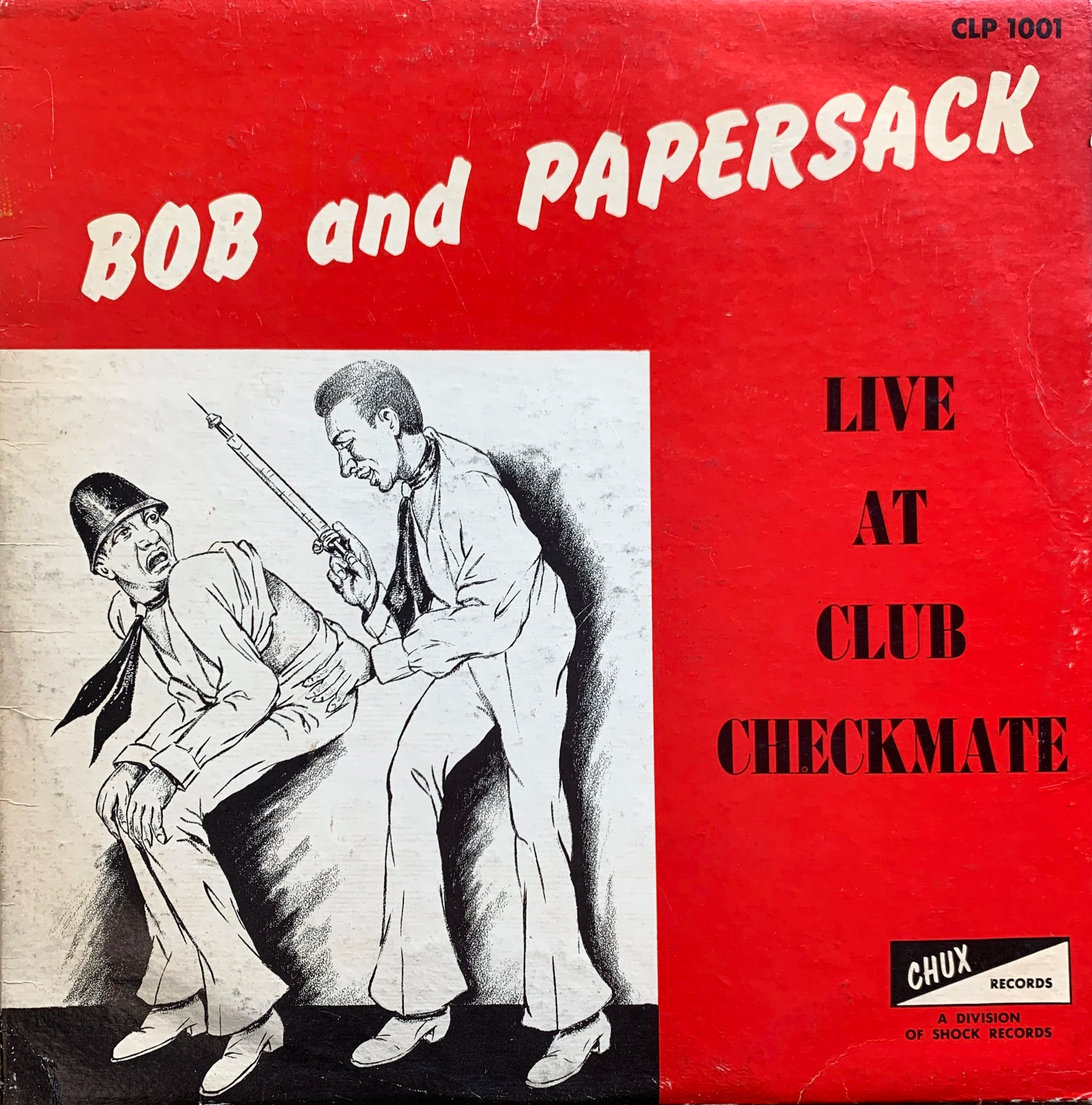
“Bob and Papersack: Live at Club Checkmate” was recorded on June 14th, 1969 at Club Checkmate, located at 339 E. Garfield Boulevard

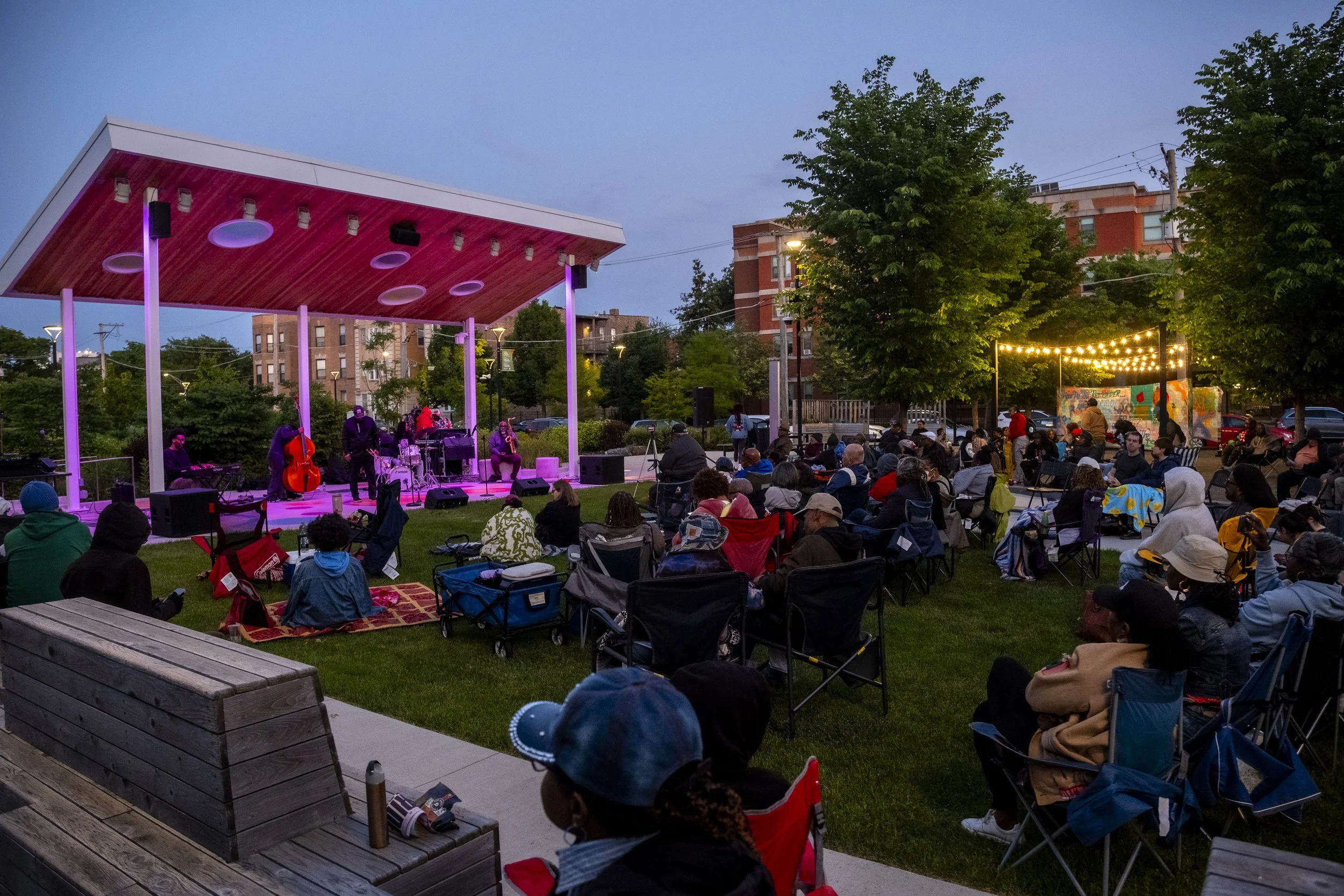
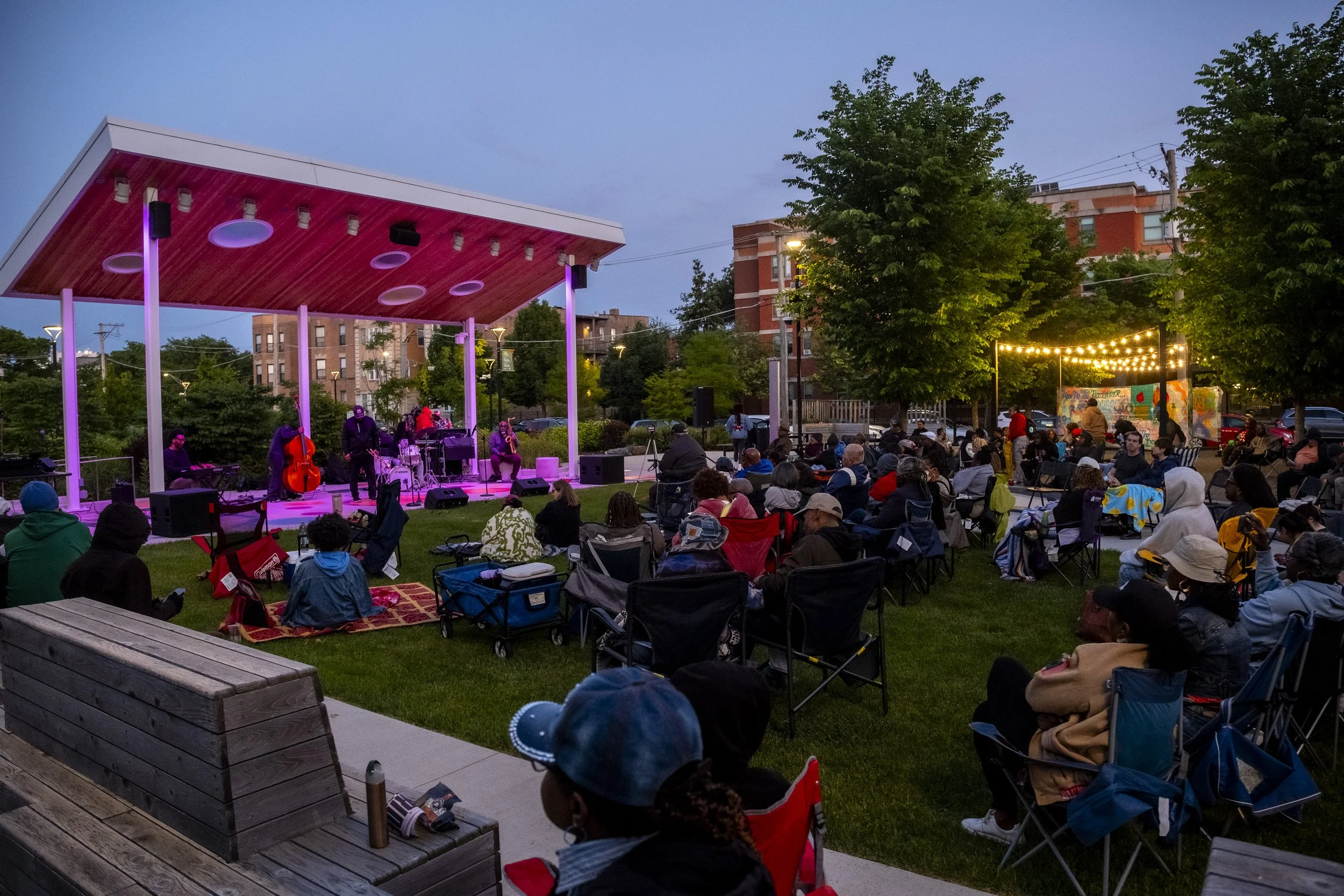
Now, 337-339 E Garfield Blvd is home to Arts + Public Life’s outdoor performance venue, The Arts Lawn. Photos by Ally Almore and Lyric Newbern
1950-1999
Between 1950 and 1999, Washington Park entered a period of profound transition. Urban renewal, discriminatory policies, and public and private disinvestment reshaped the neighborhood, contributing to population loss and the closure or demolition of homes and businesses. Despite the social and political upheavals of the 1960s and the economic challenges of the 1970s and 1980s, cultural anchors endured. Businesses such as Vontastic Records Center and Beauty Shop and Miss Lee’s Good Food, along with entertainment venues such Checkmate Lounge and Mr. Ricky’s, remained popular destinations within the neighborhood’s cultural and commercial landscape.
Residents also organized through civic, political, and cultural groups to resist disinvestment, strengthen community, and build power. Civil rights activism fueled a growing Black political consciousness and helped propel Harold Washington’s historic election as mayor in 1983. Founded in 1955, the Washington Park Camera Club (still active today) documented the neighborhood and greater Chicago life during these decades. The Bud Billiken Parade, established in 1929, continued to bring generations of Black Chicagoans to Washington Park for celebration and collective joy. Together, these enduring traditions reflected the neighborhood’s place within the cultural and political life of Black Chicago.
307 E Garfield Blvd
From Vontastic Record to Miyagi Records
339 E Garfield Blvd
From Club Checkmate to the Arts Lawn
307 E. Garfield Blvd is now home to Miyagi Records
Vontastic Record Center and Beauty Shop, at 307 E. Garfield Blvd, ca. 1960s
Display ad, Chicago Defender (Daily Edition) (1973-); Oct 11, 1973; ProQuest Historical Newspapers: Chicago Defender pg. 15
“During the 1930s and ‘40s, Garfield Boulevard had sidewalk traffic at all hours, as many of the lounges, clubs, and restaurants stayed open until just before daybreak. On hot summer nights, the grassy median of Garfield Boulevard was covered with blankets where people escaping crowded apartments slept.It only took ten minutes to walk along Garfield Boulevard from the Club DeLisa on the western edge of the Black Belt to the famous Rhumboogie Club, formerly known as Dave’s Cafe, on the eastern side. Along the way, you would pass the imposing five-story Schulze Baking Plant, the 1,400-seat Michigan Theater, and a handful of smaller clubs and cocktail lounges before passing under the elevated train station and reaching the Rhumboogie by Washington Park. Music was so vibrant in this area that even the smaller clubs had their own bands, creating a hub for musicians and entertainers of all stripes. On just the single city block of Garfield Boulevard that stretches from Washington Park to the elevated train station, there were 23 musicians who performed regularly at the Rhumboogie Club, Ciro’s Lounge, and White’s Emporium... By 1942, after [Dave’s Cafe] was renamed the Rhumboogie, you could find Joe Louis, a famous Black heavyweight champion boxer, cracking jokes and leading the show when he was in town. Louis was rumored to own shares in the club, which he later purchased. His fame helped to attract many of the top musicians of the day, such as the great swing band leader Tiny Bradshaw and the early blues musician T-Bone Walker, who recorded an album at the club. The Rhumboogie also provided performance opportunities for up-and-coming musicians like blues singer Dinah Washington, who sang at the Rhumboogie at age 22, a few years before making it big in the national R&B scene.”
—Chicago Daily Defender (Big Weekend Edition) (1966-1973); March 16, 1968
ProQuest Historical Newspaper: Chicago Defender pg. 13
“Bob and Papersack: Live at Club Checkmate” was recorded on June 14th, 1969 at Club Checkmate, located at 339 E. Garfield Boulevard
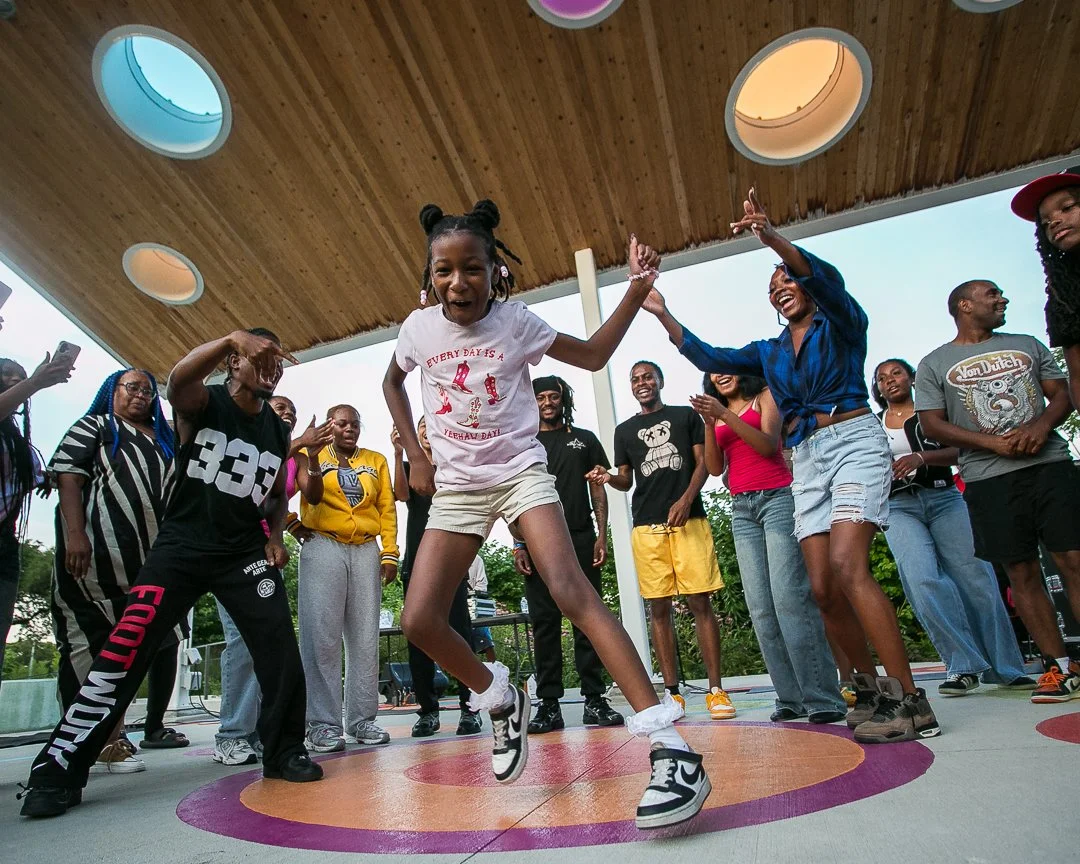
Now, 337-339 E Garfield Blvd is home to Arts + Public Life’s outdoor performance venue, The Arts Lawn. Photos by Ally Almore and Lyric Newbern
2000-present
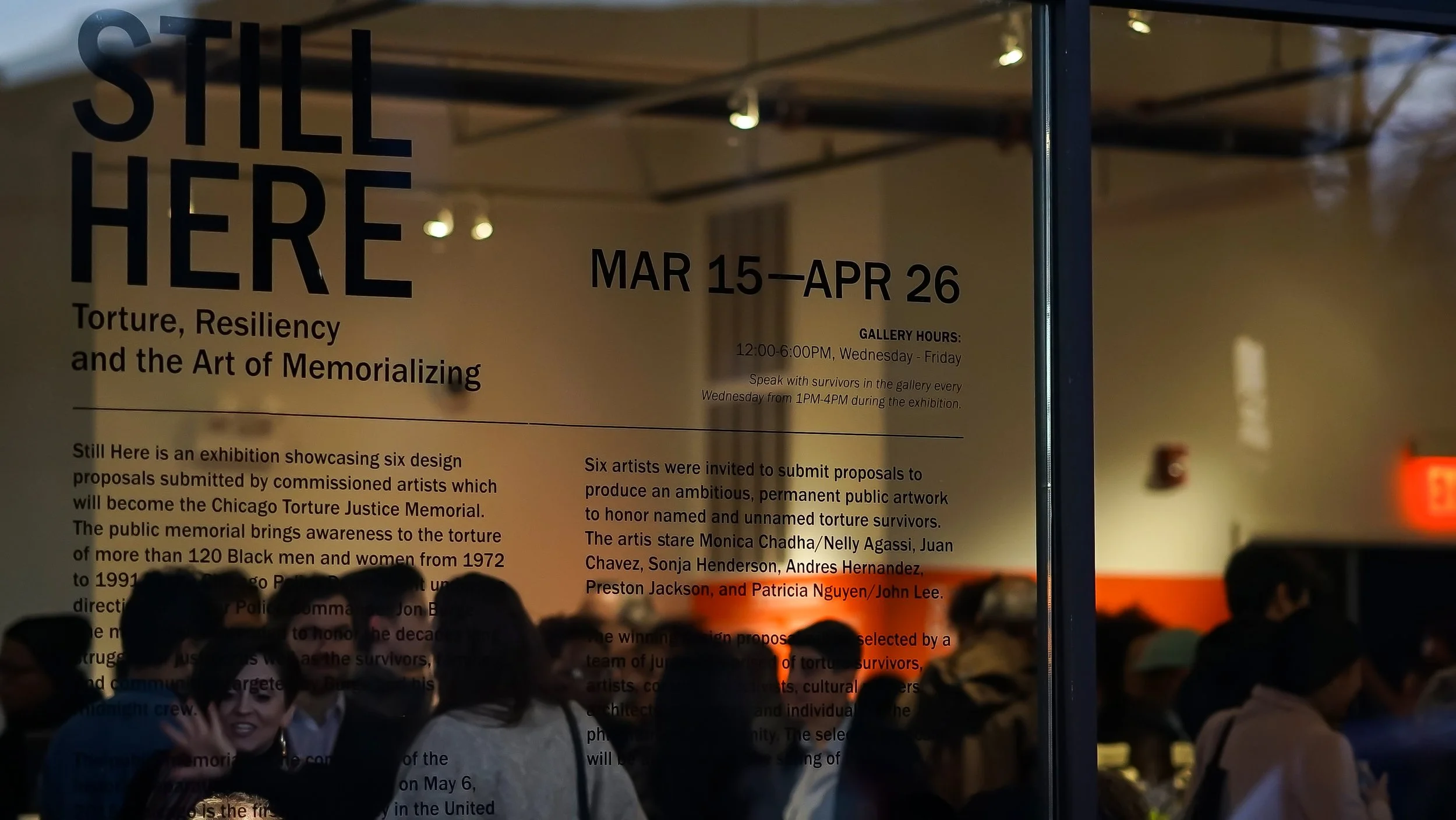
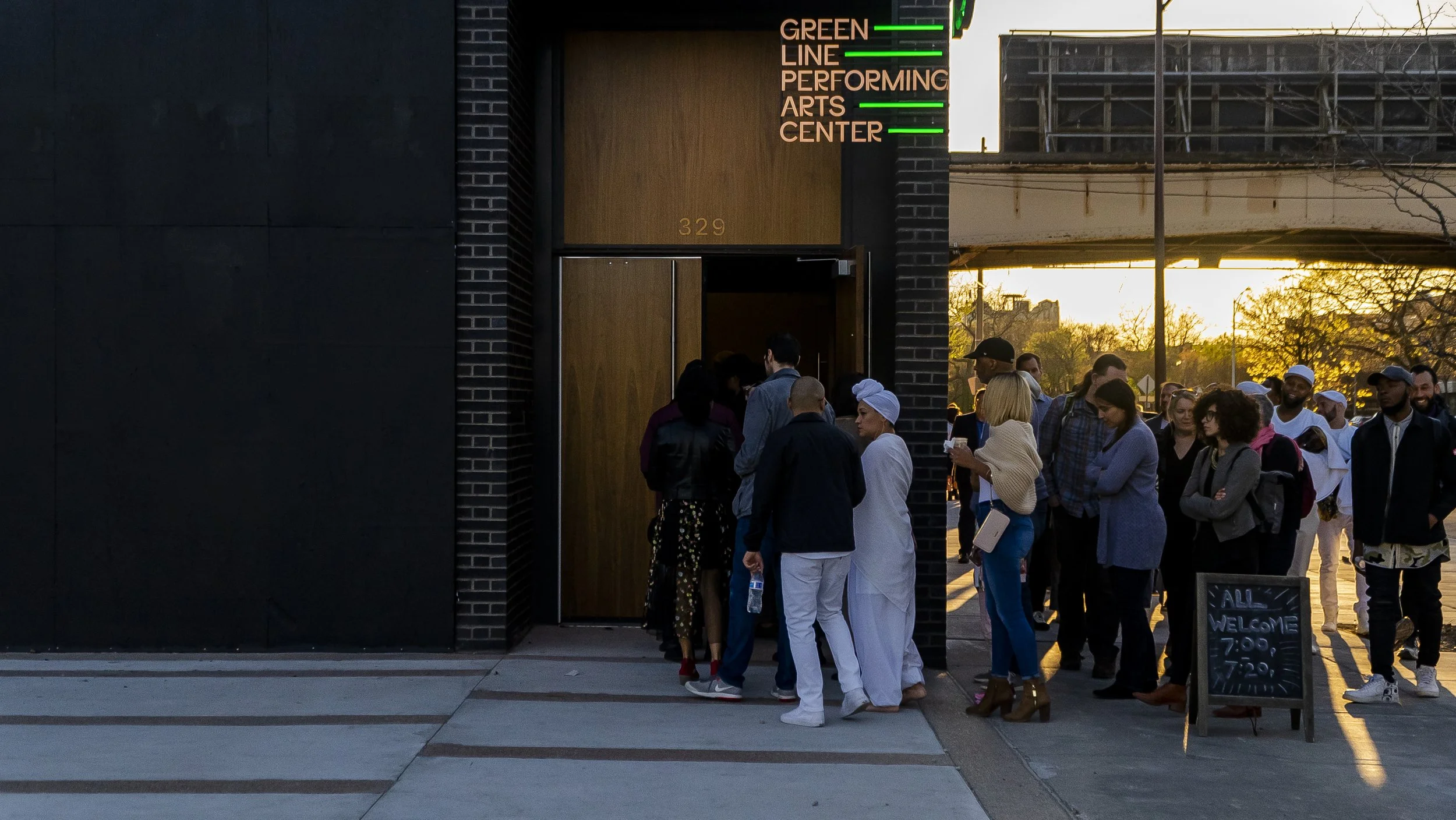
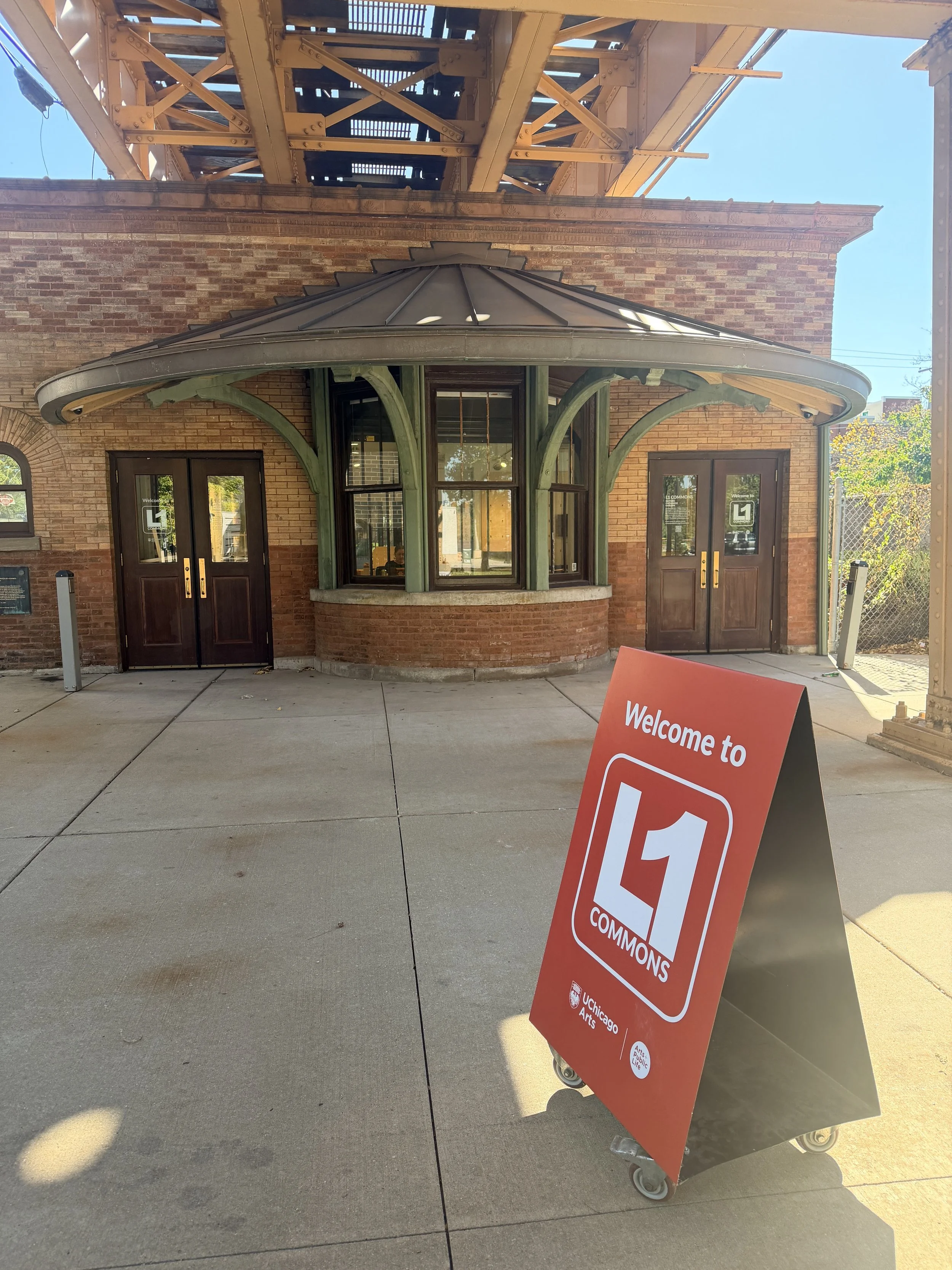
Since 2000, Garfield Boulevard has continued to evolve as a site of Black cultural life, enterprise, and assembly. Artists, residents, entrepreneurs, and neighborhood organizations have sustained creative activity amid significant physical and demographic change. The opening of Arts + Public Life’s Arts Incubator in 2013—and later the Green Line Performing Arts Center, L1, and Arts Lawn—expanded the block’s cultural infrastructure. These spaces created new opportunities for artists, young people, performances, exhibitions, businesses, and arts programming. Alongside existing institutions, residents and community partners continue to care for and shape the corridor as a place of belonging rooted in Black cultural life. Today, its cultural landscape includes Miyagi Records and the future Chicago Torture Justice Memorial. As in previous eras, Washington Park remains a cultural magnet, grounded in its rich history and oriented toward the future.
Click to view Google Earth images from 2007 and 2011 depicting the built environment along Garfield Blvd between Prairie Avenue and King Drive.
The opening of Arts + Public Life’s Arts Incubator in 2013—and later the Green Line Performing Arts Center, L1 Commons, and Arts Lawn—expanded the block’s cultural infrastructure. These spaces created new opportunities for artists, young people, performances, exhibitions, businesses, and arts programming. Alongside existing institutions, residents and community partners continue to care for and shape the corridor as a place of belonging rooted in Black cultural life. Today, its cultural landscape includes Miyagi Records and the future Chicago Torture Justice Memorial. As in previous eras, Washington Park remains a cultural magnet, grounded in its rich history and oriented toward the future.
Share your stories
The Arts Block has been a part of Washington Park's fabric for generations. The storefronts, venues, and gathering spaces along Garfield Boulevard have meant something different to everyone who has passed through — a favorite record shop, a neighborhood gathering spot, a place that shaped who you are.
What do you remember? Do you have photos, videos, or stories about the spaces on the Arts Block — past or present? We want to hear from you.
This page is a living record of the Arts Block, built from archival research, conversations with neighbors and artists, and stories that have found their way to us over the years. We’re still learning, and we know there’s more to discover. If something here doesn’t look right, if a name is missing, if you know a different version of the story, or if you have any concerns about any of the image or materials on this page, please tell us. We’d love to hear from you at artsandpubliclife@uchicago.edu.